A Reflection on 1 Corinthians 5:1–2
1 Corinthians 5:1–2 (ESV)
1 It is actually reported that there is sexual immorality among you, and of a kind that is not tolerated even among pagans, for a man has his father’s wife. 2 And you are arrogant! Ought you not rather to mourn? Let him who has done this be removed from among you.
Reflection
Paul’s words become difficult very quickly. He has just spent the beginning of this letter addressing pride, division, arrogance, and the Corinthians’ tendency to measure themselves by the people they followed. Now he turns his attention toward something happening inside the church that should have been impossible for them to ignore. There was sexual immorality among them, and not simply something that the surrounding culture considered normal. Paul describes it as something not even tolerated among the pagans. A man was living with his father’s wife. The exact circumstances aren’t the part Paul seems most interested in explaining. What concerns him is that the church knew about it, and instead of mourning over what was happening among them, they were arrogant.
That is the part that stops me.
Not only the sin.
The response to the sin.
Paul doesn’t seem surprised that there is sin in the church. He understands human nature. He knows that believers still struggle with sin. What appears to shock him is that the church has become so comfortable with it that they aren’t grieving over it. They are able to continue being the church while something destructive is happening inside the church, and somehow their pride has made them blind to it. They are more concerned with how they look than with what is actually happening.
And that makes me wonder how often I do the same thing.
I am part of the Church. Not simply a person who attends church. Not simply someone who believes the right things or participates in Christian activities. I am part of the body of Christ. So what happens when I start looking at sin in my own life? Do I mourn over it? Or do I manage it? Do I confess it? Or do I explain it? Do I actually want it gone? Or do I simply want it under control enough that nobody else can see it?
Those are different things.
There are sins I want to defeat, and there are sins I have wanted to negotiate with. I can bring something to Jesus and lay it at His feet, genuinely wanting to surrender it, only to find myself reaching down and picking it back up again later. I know what I’m doing. I know where the boundary is. I know the thing isn’t good for me. Yet somehow I convince myself that keeping it nearby isn’t the same as embracing it. I tell myself that I can keep it at arm’s length. Close enough to see. Far enough to claim I’m not really participating.
But sin doesn’t seem to work that way.
We don’t keep sin at arm’s length.
Eventually, we move closer.
The central image I keep seeing in this passage is a boundary. God’s boundaries are not arbitrary lines designed to keep me from enjoying life. They are protection. They provide freedom because they tell me where life is found and where destruction begins. Yet I often look at God’s boundaries as restrictions instead of protection. I see the line and wonder how close I can get without technically crossing it. I want to know how much I can keep without having to surrender it. I want to negotiate with the very thing Jesus is asking me to lay down.
And that is where I get myself into trouble.
The world constantly tells us that freedom means having no boundaries. Do whatever feels right. Follow your desires. Don’t let anyone tell you what you can or cannot do. Find yourself. Express yourself. Protect your happiness. But Scripture gives us a different picture. Some of the things we believe will make us free actually become the things that enslave us. We chase fame, fortune, respect, comfort, pleasure, recognition, and control, believing that having more of them will make us more satisfied. Yet the more tightly we hold them, the more they begin to hold us.
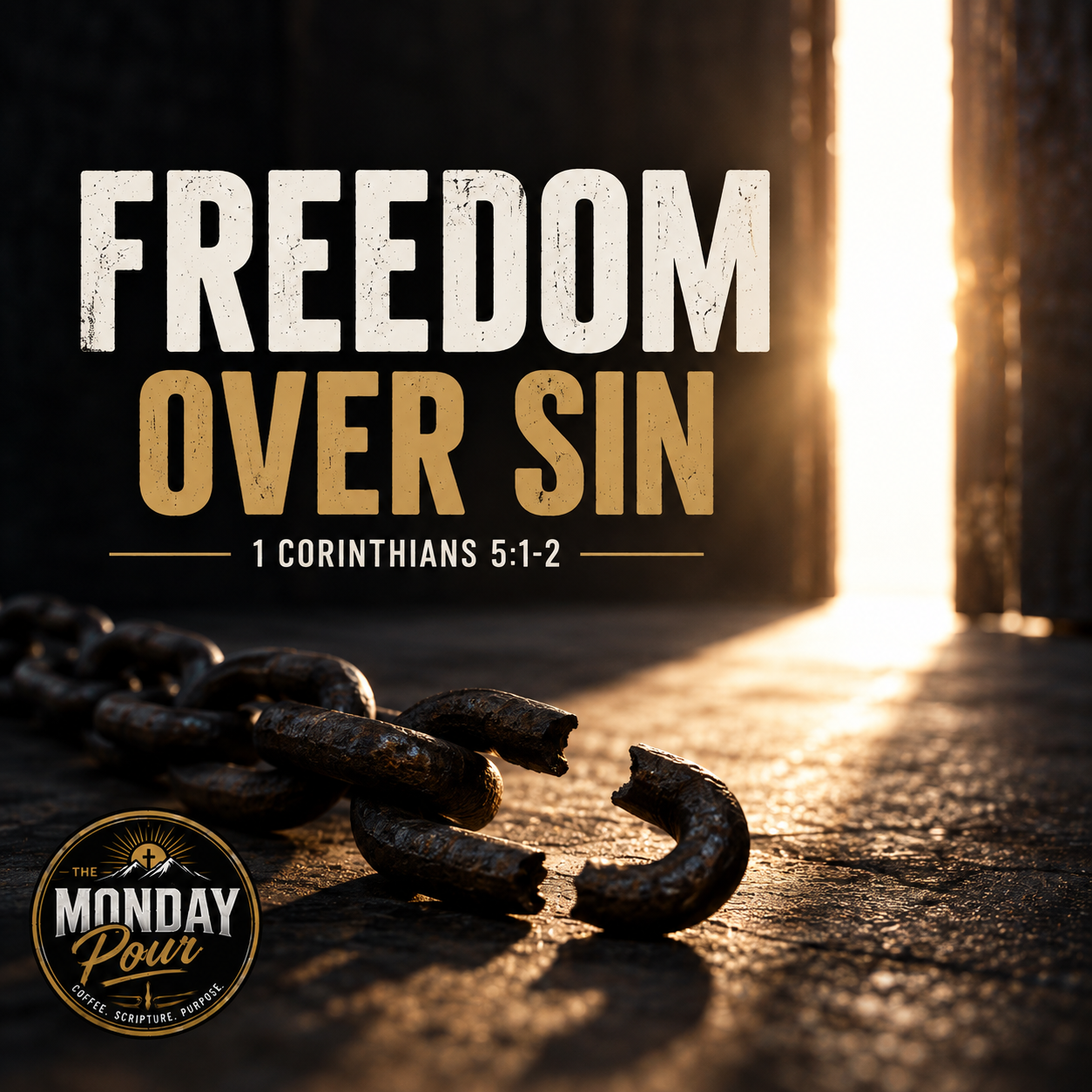
Sin promises freedom while quietly building a cage.
And the frightening part is that we can get comfortable inside it.
I think that is part of what Paul is confronting in Corinth. They had become so comfortable with their spiritual identity that they could tolerate something destructive happening within their community. They were still talking about God. They were still gathering. They were still identifying themselves as believers. They were still concerned about leadership and spiritual importance. But there was sin sitting in the middle of the church, and they weren’t broken over it.
That forces me to ask what is sitting in the middle of my own life.
What have I become comfortable with?
What have I stopped mourning?
What sin have I renamed because the real name makes me uncomfortable?
Where have I created my own boundaries because God’s boundaries feel too restrictive?
And maybe the hardest question is this: Do I actually hate the sin that I keep asking God to forgive?
Because forgiveness is beautiful. It is one of the greatest gifts we have received. The Gospel tells me that my sin does not have the final word because Christ has already dealt with it. I don’t have to live under condemnation. I don’t have to hide from God because I have failed. I can confess, repent, and return to Him because of what Jesus has done.
But grace was never meant to become permission to keep picking the same thing back up.
There is a difference between falling into sin and making peace with it.
There is a difference between struggling and surrendering.
There is a difference between repentance and simply asking forgiveness because I already know I’m planning to do it again.
That doesn’t mean I will become perfect. I won’t. None of us will. Sanctification is a lifelong process, and there will be battles that take time. There will be failures. There will be moments when I stumble. But there should also be movement. There should be a desire to become more like Christ. There should be a willingness to bring what is hidden into the light. There should be a growing hatred for the things that separate me from the God I love.
I don’t want to simply become better at managing my sin.
I want to become more like Jesus.
That costs something.
Salvation is a free gift. I cannot earn it. I cannot work hard enough to deserve it. Christ has accomplished what I could never accomplish for myself. But sanctification involves surrender. Following Jesus means allowing Him to put His finger on places in my life that I would rather leave untouched. It means allowing Him to expose what I have hidden. It means confession. It means accountability. It means sometimes making difficult decisions because freedom is worth more than temporary comfort.
There is a short-term pain associated with repentance.
But there can be a lifetime of freedom on the other side of it.
And maybe even more than that, there are people affected by the decisions I make.
That is another part of this passage I don’t want to overlook. Sin is rarely as private as we want it to be. We tell ourselves that something is only hurting us. But sin creates ripples. It affects marriages. It affects children. It affects friendships. It affects ministries. It affects our ability to serve. It affects our witness. It changes what we bring into every relationship we have.
The question isn’t simply, “What is this doing to me?”
What is this doing to the people around me?
What am I passing on?
Am I passing on life or decay?
Am I planting something that will produce freedom for the people who come after me, or am I handing them something they will eventually have to fight against?
That question makes this much more serious.
I think about the people I want to disciple. The men I want to encourage. The people who may one day hear something I’ve taught or read something I’ve written. What happens if I tell them to pursue Christ while secretly protecting the very things Christ is asking me to surrender? What happens if my words point toward Jesus but my private life points somewhere else?
We are not called to be perfect examples.
But we are called to be honest ones.
I don’t need to pretend that I have conquered every battle. I need to be willing to fight. I need to be willing to confess when I fail. I need to be willing to invite trusted people into the places where I am weak. I need people who can ask me hard questions and love me enough to stay when the answers aren’t pretty.
Because hidden sin grows in darkness.
But confession brings it into the light.
And light changes things.
Maybe that is what Paul is asking of the Corinthians. Not perfection. Not a church full of people who never struggle. He is asking them to stop pretending that sin isn’t there. Stop being arrogant. Stop protecting their image. Stop worrying about how they look and start mourning over what sin is doing to the body.
That is something I need to hear.
I can become very good at appearing okay.
I can show up.
I can serve.
I can write.
I can talk about Jesus.
I can encourage other people.
And still have places in my own heart that I don’t want anyone to touch.
I can keep the outside looking good while something underneath is decaying.
So maybe the prayer isn’t simply, “God, forgive me.”
Maybe it needs to become, “God, show me what I don’t want to see.”
Show me the sin I have normalized.
Show me the compromise I have justified.
Show me the thing I keep picking back up.
Show me where I am trying to create my own boundaries because Yours feel too restrictive.
Show me what needs to go.
And then give me the courage to let it go.
I don’t want to cherish what Jesus died to free me from.
I don’t want to keep a secret pocket full of things I’ve already laid at His feet.
I want freedom more than I want temporary comfort.
I want Christ more than I want my sin.
And if that means there is a cost, then help me pay it.
Because it is worth it.
A Prayer for Today
Papa,
There are times when I don’t want to pay the price of sanctification.
I want the forgiveness without the surrender. I want to lay something at Your feet and then pick it back up when I think I need it again. I want to believe that because You forgive me, I don’t have to take seriously what sin is doing inside me.
But I know better.
You have given me freedom, and I keep walking back toward the cage.
Help me hate the things that are destroying me. Not the people. Not myself. The sin. Help me see it clearly. Help me stop making excuses for it. Help me stop stuffing it into my pockets like a kid who knows he shouldn’t have taken something but doesn’t want to give it back.
I don’t want to hide anymore.
Give me the courage to confess.
Give me the humility to ask for help.
Give me people who will speak truth to me when I don’t want to hear it.
Give me the strength to remove the things that keep pulling me away from You.
Papa, I know salvation is a gift. I could never earn what Jesus has already accomplished for me. But I also know that following You means surrender. I want to become more like Christ. I want to live inside Your boundaries, not because I’m afraid of You, but because I trust You.
Your boundaries are not a prison.
They are life.
Teach me to believe that.
And when I fall, don’t let me stay down. Bring me back into the light. Remind me that confession isn’t the end. Repentance isn’t rejection. Conviction isn’t condemnation.
It is an invitation to come home.
I want to be free.
I want the people around me to experience life because I chose obedience instead of compromise.
I want the things I pass on to be life, not decay.
So whatever the cost, help me lay it down.
And help me leave it there.
Amen.
Reflection Questions
- What sin or compromise have you become comfortable with that you once would have mourned over?
- Where have you created your own boundaries because God’s boundaries feel too restrictive?
- What are you repeatedly laying at God’s feet and then picking back up?
- How might a hidden area of sin be affecting the people around you, even if you believe it is only hurting you?
- Who has permission to speak honestly into the areas of your life where you are most vulnerable?
- What would it look like to choose the short-term pain of repentance over the long-term cost of continuing in compromise?
- What would change if you genuinely believed that God’s boundaries are designed to lead you toward freedom rather than keep you from it?
Final Thought
I don’t want to become comfortable with the things Jesus came to free me from.
I don’t want to keep sin close enough that I can reach for it when obedience becomes difficult.
I want to lay it down.
Not because I am strong enough to never struggle again.
But because Jesus is worth more than whatever I am holding.
Maybe freedom doesn’t begin when temptation disappears.
Maybe it begins when I finally stop protecting it.
So I will bring it into the light.
I will confess it.
I will repent.
I will get back up.
And I will keep walking toward Jesus.
Whatever the cost.
It’s worth it.