
A Reflection on 1 Corinthians 4:14–21
1 Corinthians 4:14–21 (ESV)
14 I do not write these things to make you ashamed, but to admonish you as my beloved children.
15 For though you have countless guides in Christ, you do not have many fathers. For I became your father in Christ Jesus through the gospel.
16 I urge you, then, be imitators of me.
17 That is why I sent you Timothy, my beloved and faithful child in the Lord, to remind you of my ways in Christ, as I teach them everywhere in every church.
18 Some are arrogant, as though I were not coming to you.
19 But I will come to you soon, if the Lord wills, and I will find out not the talk of these arrogant people but their power.
20 For the kingdom of God does not consist in talk but in power.
21 What do you wish? Shall I come to you with a rod, or with love in a spirit of gentleness?
When Paul penned these words to the believers in ancient Corinth, he was stepping directly into a household that had grown fractured, noisy, and deeply arrogant. The church at Corinth was fascinated by status. They loved gifted speakers, impressive credentials, and spiritual rhetoric that made them look wise in the eyes of the Greco-Roman world. They had split themselves into factions, some claiming they followed Paul, others Apollos, others Peter. They were posturing like spiritual royalty, convinced they had arrived at some higher plane of Christian maturity while ignoring the blatant sin and pride festering inside their own walls.
Paul writes this section not as a cold judge handing down a sentence, but as a deeply grieved parent trying to pull his family back from the edge of destruction. He uses the sharp contrast between two distinct figures: the pedagogue, a household guardian or hired guide whose job was simply to enforce rules, deliver instruction, and supervise conduct, and the father. Corinth was overflowing with guides, tutors, and distant voices offering opinions on how they ought to live. But Paul stops the chatter by reminding them of a relational reality that could not be bought or replaced: he was the one who had birthed them into the faith through the gospel.
The central image that quietly carries this entire passage, and Paul’s whole heart here, is the image of the father.
A hired guide can give you a list of instructions and walk away when the day is done. A guide doesn’t carry you in his heart, nor does he stay awake at night weeping over your drift into foolishness. A father, however, gives life. A father stays through the mess. A father bears the weight of the home, risks the relationship to speak hard truth, and longs to see his children grow into the full, mature reflection of the family name. When Paul asks if he should come to them with a rod or in a spirit of gentleness, it isn’t the threat of a tyrant; it’s the ultimatum of a loving father who is willing to exercise hard discipline if it means saving his children from their own prideful self-destruction.
Sitting here early this morning with my Bible open and my coffee growing cold, this image of spiritual fatherhood exposes a massive, aching void in my own life and in the culture around me. Paul expands on his call of foolishness to the world and the sheer lack of commitment in the Corinthians’ walk of faith. His calling out is not meant to make them ashamed of their lack, but rather to challenge them, to admonish them, and to urge them to follow a real, visible example.
At first glance, this passage almost feels a little confusing. Earlier in this same letter, Paul was adamantly telling the church not to put too much weight on human leaders or argue over whose teachings they follow. He told them that neither the one who plants nor the one who waters is anything, but only God who gives the growth. Yet right here, he turns around and comments directly about being their spiritual father, urging them to “be imitators of me” and sending Timothy as a living blueprint of his ways in Christ.
I think, like so many profound truths in Scripture, both things are completely true at the same time. On one hand, we are never to build our foundation on a human being, nor should we raise up man-made kingdoms or boast in human names. Jesus alone is our cornerstone, and our ultimate goal is always Christlikeness. But on the other hand, God never intended for faith to be passed down through abstract theology or distant lectures. We are explicitly called to make disciples. We should naturally expect those whom we pour into to look like us, act like us, and catch our heart for the Lord, even as we point them beyond ourselves to the ultimate standard of Jesus.
That realization hits me like a lead weight in the quiet of this morning. It forces me to look past my busy schedules, my projects, and my endless list of daily tasks to ask the raw, uncomfortable questions:
Who am I actually discipling?
Am I intentionally pouring my life into those immediately around me, or am I just coasting along in passive, comfortable relationships? Do I have a Timothy in my life? I have plenty of acquaintances. I have good friends, and I have men in my circle who sharpen me while I sharpen them in mutual, peer-to-peer accountability. But do I have a single, intentional disciple coming up behind me, a son in the faith whom I am actively inviting into my life, my mess, and my daily walk with God?
I look around the modern church and I see a culture flooded with “guides”. We have endless podcasts, books, videos, and social media voices feeding us information from a safe distance. But we are starving for spiritual fathers and mothers. We are starving for men and women who will step into the messy, unpolished work of real-life discipleship. I think I should have a Timothy. In fact, I’m realizing that if I am truly following the pattern of Scripture, I must have one.
This passage provokes a deep, quiet examination of my own spiritual legacy. When I peel back the layers of my life, what does my footprint actually look like? How well have I discipled my own children under my own roof? Have I modeled an authentic, self-sacrificing faith for them, or have I just passed down religious expectations and passive routines? How many spiritual children do I have? How many seeds have I actually planted that took root in another person’s soul?
It isn’t about boasting in anything I’ve accomplished or trying to count numbers to build up my own spiritual ego. Deep down, I really don’t care about the numbers. What I care about, what keeps me up praying in the early hours, is whether my existence has been significant enough to make an eternal difference in someone else. Did I actually plant seeds? Has my daily life been lived in a way that visibly points people back to the Father? Have I displayed the actual, tangible character of Christ to others? Have I truly loved the unlovable, prayed from the heart for my enemies, fed those in physical need, or offered real shelter to the broken and homeless?
Or have I simply been a “guide” who talks a good game while keeping my life comfortable, safe, and isolated?
Paul’s words to Corinth strip away the luxury of spiritual passivity. He reminds us that the kingdom of God does not consist in endless talk, but in power, the real, transformative power of the Holy Spirit lived out in authentic, self-giving relationships. The passage challenges me to the core to find a Timothy. It exposes a gap, a genuine need in my life that I can no longer ignore. I don’t want to just be a consumer of truth or a distant guide giving advice. I want to be a father in the faith.
Papa,
What does my spiritual legacy actually look like to You? Strip away my pride, my need for performance, and the illusions I build up to make myself feel accomplished. Show me how well I am truly discipling my own children, and forgive me for the times I’ve allowed passivity or my own selfish pursuits to take the lead. I don’t care about building a name for myself or boasting in anything I’ve done, but I long to see what You have done through me. I want my life to mean something for Your Kingdom. Did I actually plant seeds today? Have I displayed Jesus to the person standing right in front of me?
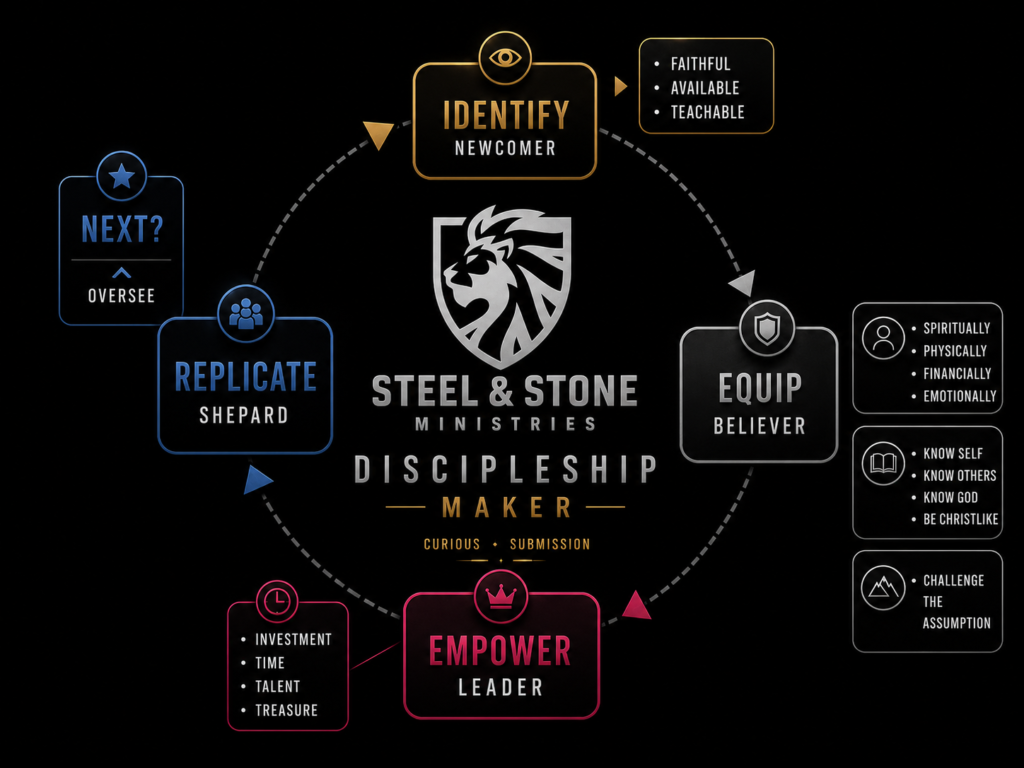
You know how easily I get guarded, how easily I retreat into my own head, and how quick I am to settle for comfortable friendships rather than doing the hard, messy work of intentional discipleship. Lord, this passage has provoked me. It has exposed a real need in my soul. I am asking You directly to bring me the one I should be pouring into. Bring me a Timothy. Make it overwhelmingly clear who is faithful, available, and teachable. Give me the patience, humility, and fatherly heart to walk alongside them, to show them my flaws and my faith, and to lead them closer to You.
Amen.
Reflection Questions
- Am I currently acting more like a distant “guide” who shares spiritual information, or a “father” who intentionally invests in the mess of someone else’s life?
- Who is the “Timothy” in my life right now, and if I don’t have one, what fears or distractions are keeping me from seeking one out?
- Does my life inside my own home provide my children with a visible, authentic pattern of Christlikeness worth imitating?
- Where have I relied on “talk” and religious words rather than the actual, transformative power of the Holy Spirit in my daily walk?
- What hidden idols of comfort or self-preservation am I holding onto that prevent me from sacrificing my time for the next generation?
Final Thought
Discipleship isn’t about finding someone to copy your personality; it’s about opening your real, unpolished life to another person so they can see how a real believer follows Jesus through victory, failure, repentance, and grace. Don’t wait until you have everything figured out to step into someone else’s life. Look around your table, look around your church, and ask God to show you the one person who needs a father, a mentor, and a friend to point them back to Christ.